
Out-of-State Car Registration — Ohio
Free to compare
The Registration Timing Problem
You moved to Ohio with a car titled in another state. The vehicle is insured under your prior state's policy, the coverage meets or exceeds Ohio's minimums, and you assumed you could register the car first and then switch insurance. The Ohio Bureau of Motor Vehicles will not accept that sequence. Ohio requires proof of Ohio insurance before it will issue registration and plates.
This creates a procedural catch: you cannot register the car without Ohio insurance, but many carriers will not write an Ohio policy on a vehicle that is not yet registered in Ohio. The solution is to understand what the BMV actually accepts as proof, and in what order the steps must occur.
“The BMV will not register your out-of-state car until you show proof of an Ohio policy listing Ohio as the garaging state.”

Check Your Rate Against Other Ohio Drivers
Get My Ohio Car Insurance Quote$25,000 / $50,000 / $25,000
Ohio Minimum Liability Limits
Ohio requires $25,000 bodily injury per person, $50,000 bodily injury per accident, and $25,000 property damage. Your out-of-state policy may meet these limits, but the BMV will not accept it as proof unless it is issued by an Ohio-licensed carrier and lists Ohio as the garaging state.
Ohio Revised Code 4509.45
What Ohio Accepts as Proof of Insurance
The BMV accepts an insurance identification card issued by a carrier licensed to write auto insurance in Ohio, showing the vehicle's VIN, the policy effective date, and Ohio as the garaging address. The card must be current on the day you apply for registration. An out-of-state insurance card — even one showing coverage that exceeds Ohio's minimums — does not satisfy this requirement.
The BMV also accepts electronic proof via the Ohio Insurance Verification System, which carriers report into directly. If your new Ohio carrier files electronically, the BMV can verify coverage in real time without requiring a physical card. Not all carriers file electronically on day one; confirm this with your carrier before you go to the BMV.
If you are registering a vehicle you just purchased from an out-of-state seller, the BMV requires proof that you insured the vehicle in Ohio before you drove it home. The grace period that covers a newly-purchased vehicle on your existing policy applies only when that existing policy is an Ohio policy. An out-of-state policy does not extend grace coverage to a vehicle you are bringing into Ohio for the first time.
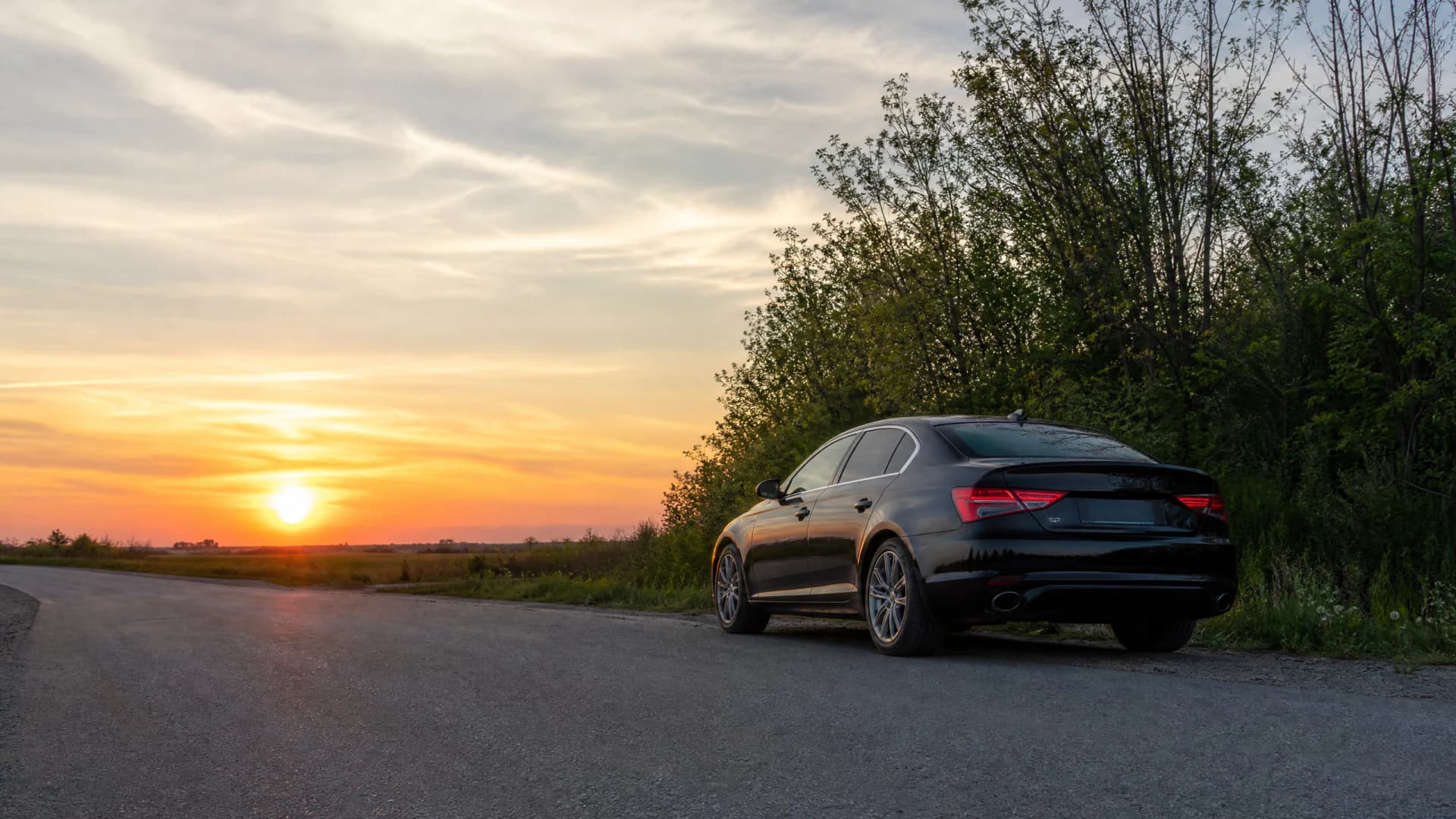
The BMV will not register your out-of-state car until you show proof of an Ohio policy listing Ohio as the garaging state, even if your prior-state policy is still active.





When Your Out-of-State Policy Ends
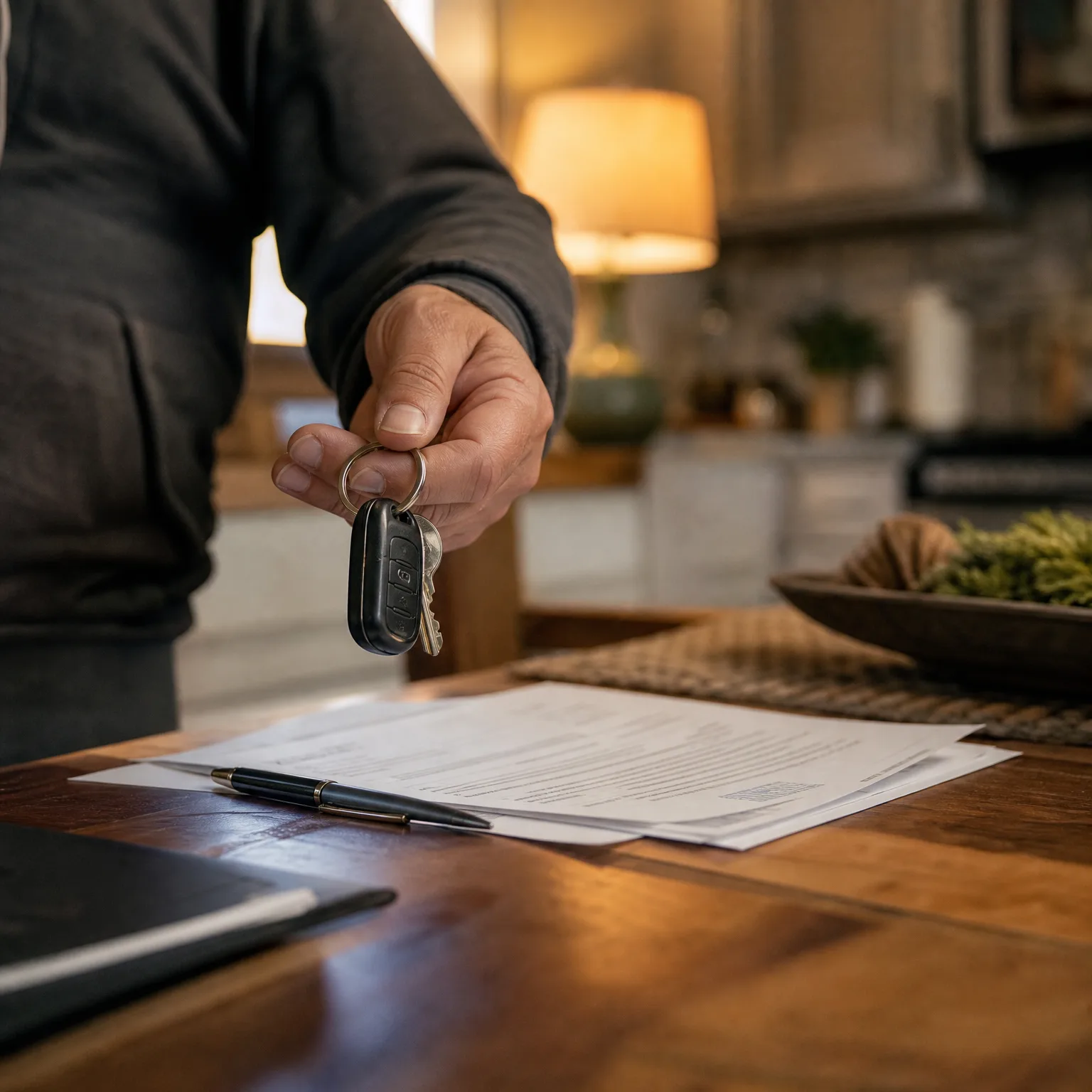
Your prior-state policy does not automatically cancel when you move to Ohio. Contact your prior-state carrier and request cancellation effective the date your Ohio policy begins. Most carriers will refund the unused premium on a pro-rata basis. If you do not cancel the prior-state policy, you will pay for two policies simultaneously until the prior-state policy term ends.
If you are moving mid-policy-term and your prior-state carrier also writes in Ohio, ask whether the carrier can transfer your policy to Ohio rather than cancel and rewrite. Some carriers will transfer the policy, preserve your renewal date, and avoid a gap in continuous coverage. Not all carriers offer this; if yours does not, the standard sequence is to cancel the prior-state policy and start a new Ohio policy the same day.
Ohio does not penalize you for a coverage gap if the gap occurred because you moved from another state, but a gap longer than a few days will cause most Ohio carriers to rate you as a higher risk. Keep the transition seamless: start the Ohio policy the day before or the day of your BMV appointment, and cancel the prior-state policy the same day.
18.5%
Ohio Uninsured Motorist Rate
Nearly one in five Ohio drivers operates without insurance. Ohio does not require uninsured motorist coverage, but the high uninsured rate makes it worth considering when you structure your Ohio policy.
Insurance Information Institute, 2023

Multi-Vehicle Households and Policy Structure
If you are moving to Ohio with more than one vehicle, insure all of them on the same Ohio policy before you register any of them. Most carriers offer a multi-car discount that reduces the per-vehicle premium when every vehicle in the household sits on one policy. The discount typically requires that all vehicles share the same garaging address and that all drivers in the household are listed on the policy.
If one vehicle is titled in your name and another is titled in a spouse's or household member's name, both vehicles can still sit on the same policy as long as both owners live at the same address. The BMV will accept proof of insurance for each vehicle individually, but the carrier will rate them together and apply the multi-car discount to the combined premium.
What to Do Right Now
Contact an Ohio-licensed carrier and request a quote for your out-of-state vehicle using your Ohio garaging address. Provide the VIN, the out-of-state title information, and the date you plan to register the vehicle. Confirm the carrier will issue an insurance card or file electronically into the Ohio Insurance Verification System before your BMV appointment. Once the Ohio policy is active, schedule your BMV visit and bring the required documents. The BMV will not register your vehicle without proof of Ohio insurance, so do not go to the counter until the Ohio policy is in force.
The Correct Registration Sequence
First, obtain an Ohio auto insurance policy on the vehicle before you go to the BMV. Provide the carrier with the out-of-state title, the VIN, and the Ohio address where the vehicle will be garaged. Most carriers will write the policy on an out-of-state-titled vehicle as long as you confirm you are an Ohio resident and the vehicle will be garaged in Ohio. The policy effective date must be the day you apply for registration or earlier. Request an insurance identification card showing the Ohio garaging address, or confirm the carrier will file electronically into the Ohio Insurance Verification System.
Second, gather the documents the BMV requires for out-of-state title transfer and registration: the out-of-state title signed by all owners, a completed Ohio Title Application, proof of identity, proof of Ohio residency, and the Ohio insurance card or electronic verification. If the out-of-state title shows a lienholder, you will also need a lien release or a letter from the lender authorizing Ohio registration. Third, complete the title transfer and registration at your county BMV office. The BMV will verify your Ohio insurance, issue Ohio plates, and mail the Ohio title to you or to your lienholder within a few weeks.
Get Your Free Quote
Get My Ohio Car Insurance QuoteFrequently Asked Questions
Can I register my out-of-state car in Ohio with my current insurance policy?
No. Ohio requires proof of an Ohio auto insurance policy before the BMV will register an out-of-state vehicle. Your prior-state policy does not satisfy this requirement even if the coverage meets or exceeds Ohio's minimum liability limits. You must obtain an Ohio policy listing Ohio as the garaging state before you apply for registration.
How long do I have to register my car after moving to Ohio?
Ohio law does not specify a grace period for new residents to register out-of-state vehicles, but you are required to obtain an Ohio driver license within 30 days of establishing residency. As a practical matter, register your vehicle as soon as you have proof of Ohio insurance and the required documents. Driving an unregistered vehicle in Ohio can result in a citation.
Do I need to cancel my out-of-state insurance before getting an Ohio policy?
No. Start your Ohio policy first, then cancel your prior-state policy effective the same day or the day after. This avoids a coverage gap. Most carriers refund unused premium on a pro-rata basis when you cancel mid-term. If you cancel the prior-state policy before the Ohio policy starts, you will have a gap that Ohio carriers may rate as higher risk.
What documents does the Ohio BMV require to register an out-of-state car?
The BMV requires the out-of-state title signed by all owners, a completed Ohio Title Application, proof of identity, proof of Ohio residency, and proof of Ohio auto insurance. If the title shows a lienholder, bring a lien release or a letter from the lender authorizing Ohio registration.
Can I insure my car in Ohio before I register it?
Yes. Most Ohio carriers will write a policy on an out-of-state-titled vehicle as long as you confirm you are an Ohio resident and the vehicle will be garaged in Ohio. Provide the carrier with the VIN, the out-of-state title information, and your Ohio address. The policy must be active before you go to the BMV to register the vehicle.
Does Ohio require uninsured motorist coverage?
No. Ohio does not mandate uninsured motorist coverage, but 18.5% of Ohio drivers operate without insurance. Many carriers offer uninsured and underinsured motorist coverage as optional add-ons. Consider adding it when you structure your Ohio policy, especially if you are moving from a state where it was required.