
Moving to Ohio Car Insurance — Ohio
Free to compare
The Registration Window Starts When You Arrive
Ohio law gives you 30 days from the date you establish residency to register every vehicle you brought with you. That clock starts the day you move in, not the day you visit the BMV. If you own two or more cars, each one must be titled and registered in Ohio within that window, and each registration requires proof of Ohio financial responsibility before the BMV will issue plates.
Your out-of-state insurance policy does not automatically satisfy Ohio's proof requirement. Most carriers will not issue an Ohio-compliant proof-of-insurance card until you convert your policy to an Ohio address and garaging location. That conversion often re-rates your entire policy, which means the premium you paid in your prior state no longer applies. The 30-day window forces you to sequence three steps in order: convert your policy to Ohio, obtain Ohio proof cards for every vehicle, then register each car at the BMV.
“The BMV will not register a vehicle with an out-of-state proof card—your carrier must issue Ohio-compliant proof before you can get plates.”

Check Your Rate Against Other Ohio Drivers
Get My Ohio Car Insurance Quote$25,000 / $50,000 / $25,000
Ohio Minimum Liability Limits
Ohio requires at minimum $25,000 bodily injury per person, $50,000 bodily injury per accident, and $25,000 property damage. Your policy must meet or exceed these limits for every vehicle you register, and your proof card must show Ohio as the garaging state.
Ohio Revised Code 4509.51
Out-of-State Policies Do Not Transfer Automatically
When you move to Ohio, your existing auto policy does not convert itself. The policy remains anchored to your prior state's garaging address, rating territory, and coverage requirements until you contact your carrier and request an address change. That address change is not a simple administrative update. It re-rates your policy from scratch using Ohio's rating factors, which include your new county, your new garaging ZIP code, Ohio's fault system, and Ohio's minimum coverage mandates.
If your prior state required personal injury protection or uninsured motorist coverage and Ohio does not mandate those coverages, your carrier may drop them unless you affirmatively elect to keep them. If your prior state had lower liability minimums than Ohio's $25,000 / $50,000 / $25,000 floor, your carrier will raise your limits to meet Ohio's requirement and adjust your premium accordingly. The re-rating happens at the moment you change your address, not at your next renewal.
Most carriers will not issue an Ohio proof-of-insurance card until the address change is complete and the policy reflects Ohio as the garaging state. That means you cannot walk into the BMV with your old proof card from another state and expect it to satisfy Ohio's registration requirement. The BMV checks that the proof card shows Ohio as the state of garaging, and if it does not, the registration is denied.

The BMV will not register a vehicle with an out-of-state proof card. Your carrier must issue Ohio-compliant proof before you can get plates, and most carriers will not issue that proof until your policy address is changed to Ohio.




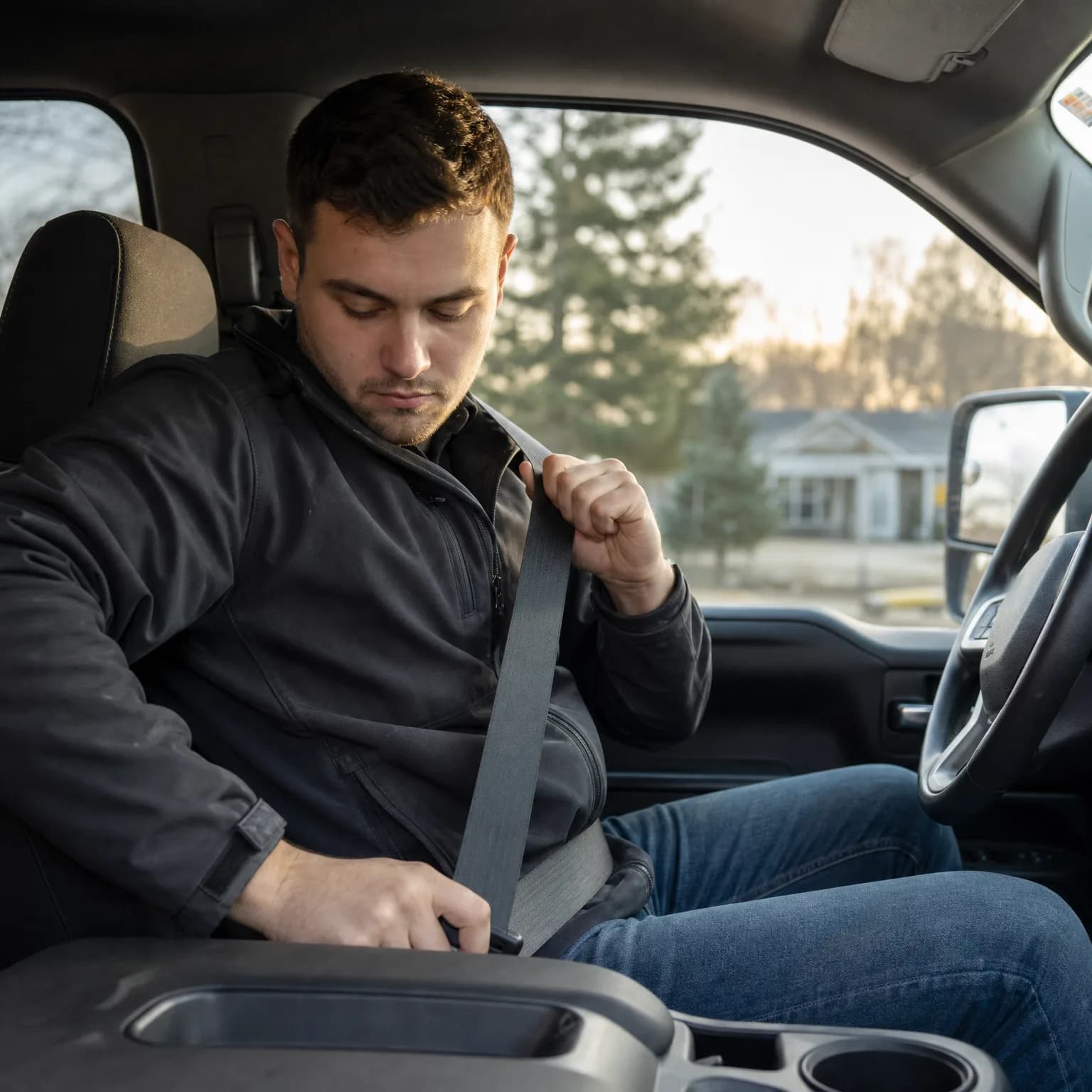
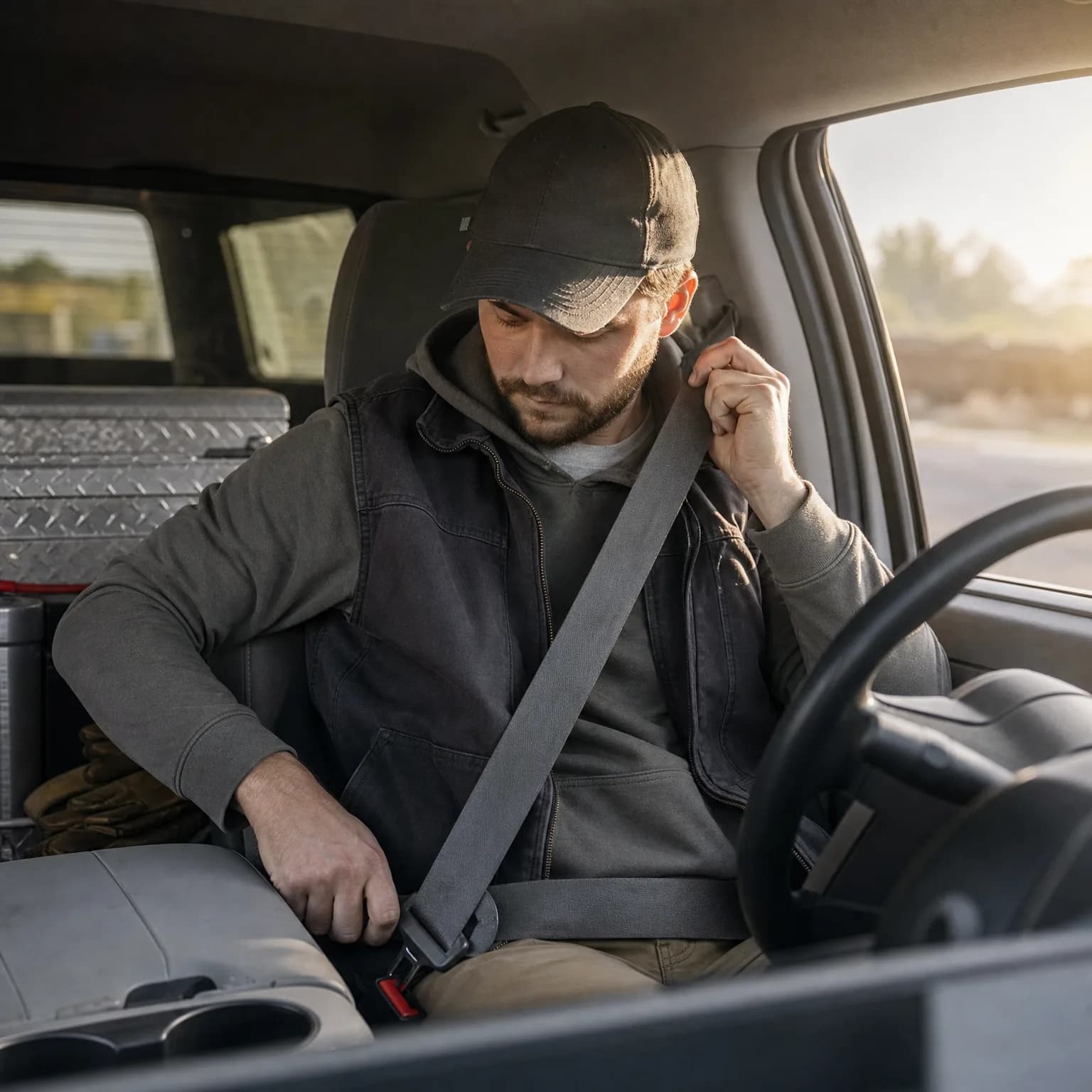

Registration Sequence for Multiple Vehicles
Once your carrier issues Ohio proof cards for every vehicle, you can register them at any Ohio BMV location. You do not need to register all vehicles on the same day, but all must be registered within 30 days of your move-in date. For each vehicle, bring the out-of-state title, the Ohio proof-of-insurance card for that specific vehicle, and payment for the title fee and registration fee. If the vehicle has a lien, bring the lienholder's name and address so the Ohio title can be issued correctly.
Ohio charges a title fee and a registration fee for each vehicle. The registration fee varies by vehicle weight and county of residence. If you miss the 30-day window, the BMV may assess a late-registration penalty. That penalty applies per vehicle, so a household with three cars that registers late pays the penalty three times. The BMV does not waive the penalty for out-of-state moves.
If one of your vehicles is titled in another person's name but garaged at your Ohio address, that vehicle must also be registered in Ohio within 30 days. The titleholder does not need to be an Ohio resident, but the vehicle's garaging address determines where it must be registered. If the vehicle sits in your Ohio driveway, it needs Ohio plates regardless of who owns it.
30 carriers
Ohio Multi-Car Carrier Count
At least 30 carriers write auto insurance for Ohio households with multiple vehicles, including standard, preferred, and non-standard tiers. If your prior carrier does not operate in Ohio, you have options across every price and service tier.

When Your Carrier Does Not Write in Ohio
Not every carrier writes policies in every state. If your current carrier does not operate in Ohio, you will need to shop for a new policy before your 30-day registration window closes. Start the search as soon as you know your move-in date. Request quotes from carriers that write multi-car policies in Ohio, and ask each carrier whether they offer a multi-car discount and what the discount requires. Most multi-car discounts require every vehicle to sit on the same policy and garage at the same address.
When you switch carriers, your old policy must be canceled effective the day your new Ohio policy begins. A coverage gap between the two policies can trigger a lapse penalty at the BMV, and a lapse on your insurance record can raise your rates with the new carrier. Coordinate the cancellation date with your old carrier and the effective date with your new carrier so that coverage transfers seamlessly. If you own multiple vehicles, confirm that the new carrier will bind all of them on the same policy before you cancel the old one.
Compare Ohio Carriers Before You Register
Ohio's carrier roster includes standard, preferred, and non-standard insurers. Rates vary widely by carrier, county, and the number of vehicles you insure on one policy. A carrier that offered the lowest rate in your prior state may not be competitive in Ohio, and a carrier you never considered before may now be the best fit for your household. Request quotes from at least three carriers that write multi-car policies in your Ohio county, and compare not just the premium but the discount structure, the claims process, and whether the carrier allows you to add or remove vehicles mid-term without re-rating the entire policy. Use the comparison tool on this site to see which carriers write coverage for households with multiple vehicles in Ohio, then request quotes directly from the carriers that match your needs.
How to Convert a Multi-Car Policy to Ohio
Contact your carrier as soon as you establish your Ohio address. Provide your new street address, the county where you will garage the vehicles, and the date you moved. The carrier will re-rate your policy using Ohio's liability minimums, your new rating territory, and any Ohio-specific coverage mandates. If you carried coverages in your prior state that Ohio does not require, ask whether those coverages remain on your policy or drop automatically. The carrier will issue new proof-of-insurance cards showing Ohio as the garaging state for every vehicle on the policy.
If your carrier does not write policies in Ohio, you will need to cancel your existing policy and buy a new one from a carrier licensed in Ohio. The cancellation must be timed so that your new Ohio policy begins the same day your old policy ends, leaving no coverage gap. A gap of even one day can trigger a lapse penalty when you register your vehicles at the BMV. When you own multiple cars, the new Ohio carrier must add every vehicle to the same policy if you want to preserve any multi-car discount you had on your prior policy.
Get Your Free Quote
Get My Ohio Car Insurance QuoteFrequently Asked Questions
Can I register my car in Ohio with my out-of-state insurance policy?
No. The Ohio BMV requires proof of financial responsibility showing Ohio as the garaging state. Your out-of-state proof card will not satisfy that requirement. Contact your carrier to change your policy address to Ohio, then request new proof cards showing Ohio before you visit the BMV.
How long do I have to register my vehicles after moving to Ohio?
Ohio law requires new residents to register every vehicle within 30 days of establishing residency. That deadline applies to each car you own, and missing it can result in a late-registration penalty assessed per vehicle.
Do I need separate insurance policies for each car I bring to Ohio?
No. Most carriers allow you to insure multiple vehicles on one policy, and doing so typically qualifies you for a multi-car discount. The discount usually requires every vehicle to sit on the same policy and garage at the same address.
What happens if my current carrier does not write policies in Ohio?
You will need to buy a new policy from a carrier licensed in Ohio before your 30-day registration window closes. Cancel your old policy effective the same day your new Ohio policy begins to avoid a coverage gap, which can trigger a lapse penalty at the BMV.
Does moving to Ohio change my car insurance premium?
Yes. When you change your policy address to Ohio, your carrier re-rates your policy using Ohio's rating factors, including your new county, garaging ZIP code, and Ohio's minimum liability limits. Your premium may go up or down depending on how Ohio's rating factors compare to your prior state.
Can I register one car now and the others later?
Yes, as long as all vehicles are registered within 30 days of your move-in date. You do not need to register every car on the same day, but each one must be registered before the 30-day deadline to avoid a late penalty.