
What Ohio Calls Minimum Coverage
Ohio requires every registered vehicle to carry liability insurance with three separate limits: $25,000 per person for bodily injury, $50,000 per accident for bodily injury, and $25,000 per accident for property damage. These three numbers together form the state's minimum coverage requirement. A policy that meets only one or two of these limits does not satisfy Ohio law.
The three-part structure protects other drivers when you cause an accident. The per-person limit pays medical bills and lost wages for one injured person. The per-accident bodily injury limit is the total your policy pays for all injuries in a single crash. The property damage limit covers repair or replacement of the other driver's vehicle and any other property you damage. Your own injuries and vehicle damage are not covered by liability insurance — you need collision, comprehensive, or medical payments coverage for that.
Compare car insurance rates in your state
Get quotes from licensed carriers — no obligation, no spam, results in minutes.
Get Your Free QuoteOhio Minimum Liability Limits
$25,000/$50,000/$25,000
These three limits must appear on every auto insurance policy issued in Ohio. The first number is bodily injury per person, the second is bodily injury per accident, and the third is property damage per accident. A policy missing any one of these limits does not meet state requirements.
Ohio Bureau of Motor Vehicles
Why Three Limits Instead of One
Ohio structures its minimum coverage requirement around the worst-case scenario: a crash that injures multiple people and totals their vehicles. The per-person bodily injury limit prevents one severely injured person from exhausting the entire policy, leaving other injured parties with nothing. The per-accident bodily injury limit caps total medical payouts across all injured people in a single crash. The property damage limit covers vehicle repair and replacement costs separately from injury costs.
This three-part structure means your liability policy can pay up to $50,000 for injuries in a single accident, but no more than $25,000 to any one person. The third injured person would file a claim against your personal assets or pursue an underinsured motorist claim on their own policy.
Property damage works independently. If you total another driver's $30,000 vehicle, your $25,000 property damage limit pays the first $25,000. The bodily injury limits do not apply to property damage, and the property damage limit does not apply to injuries. Each limit operates in its own lane.
All three limits must be present at the required amounts or higher.
How Ohio Verifies You Carry Minimum Coverage
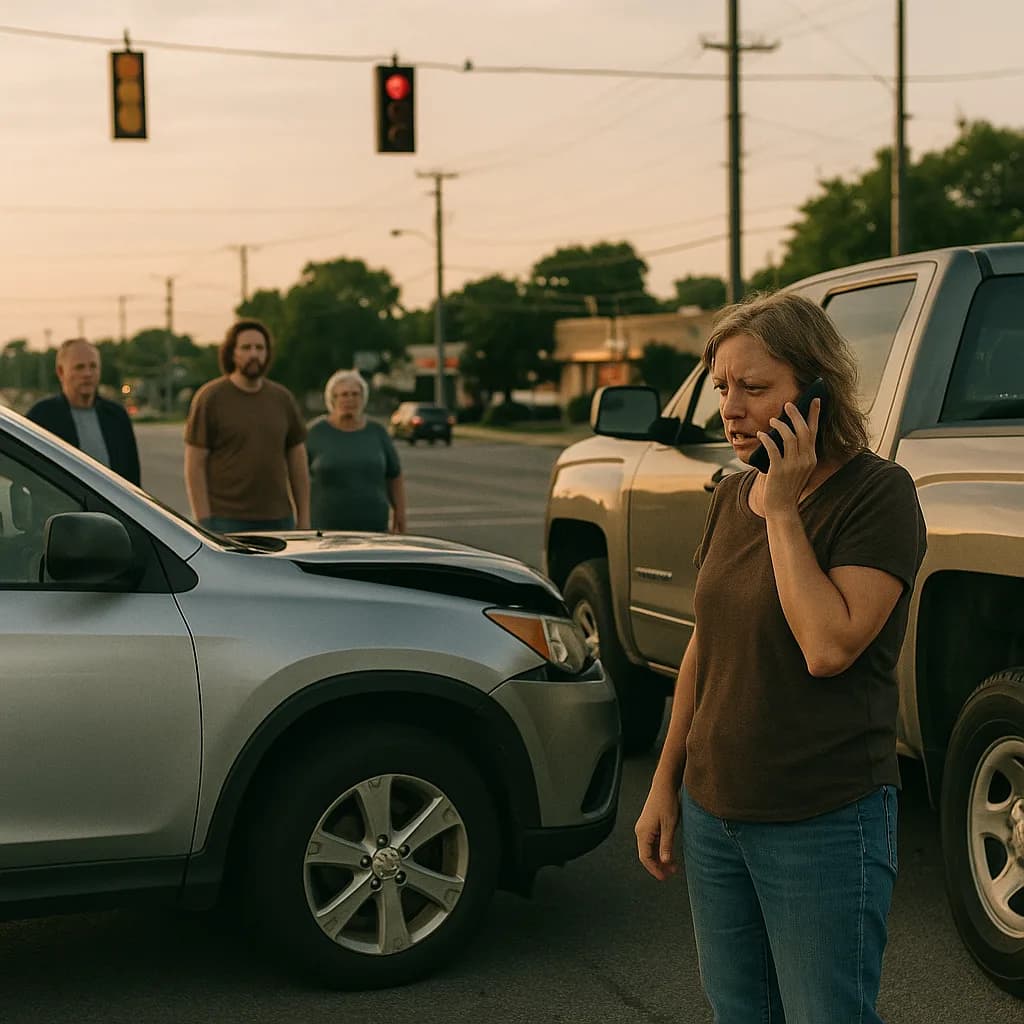
When you register a vehicle, the Bureau of Motor Vehicles receives an electronic insurance verification from your carrier confirming your policy meets the $25,000/$50,000/$25,000 minimum. The BMV does not accept paper insurance cards as proof of coverage at registration — the verification must come directly from the carrier through the state's electronic system. If your carrier has not filed the verification, your registration is denied even if you hold a valid policy.
Ohio's electronic verification system runs continuously after registration. If your carrier cancels your policy or your coverage lapses, the carrier notifies the BMV electronically within days. The state does not send a warning before suspension — the lapse triggers the suspension automatically. Driving with a suspended registration is a misdemeanor, and a traffic stop results in vehicle impoundment.
Related Articles




What Minimum Coverage Does Not Pay For
Ohio's minimum liability coverage pays only for damage you cause to other people and their property. It does not cover your own medical bills, your own vehicle damage, or injuries to passengers in your car. If you cause a crash and injure yourself, you pay your own medical bills unless you carry medical payments coverage or personal injury protection. If you total your own vehicle, you pay to replace it unless you carry collision coverage.
Liability coverage also does not pay for damage another driver causes to you. If an uninsured driver hits you, your liability policy pays nothing toward your injuries or vehicle repair. You need uninsured motorist coverage to protect yourself in that scenario. Ohio does not require uninsured motorist coverage, so many drivers who carry only the state minimum have no protection when an at-fault driver has no insurance. With 18.5% of Ohio drivers uninsured, that gap is not hypothetical.
Comprehensive coverage for theft, vandalism, weather damage, and animal strikes is also absent from minimum coverage. A tree falls on your parked car, your liability policy pays nothing. Your vehicle is stolen, your liability policy pays nothing. Minimum coverage is the narrowest legal product Ohio allows — it protects other people from you, and no one else.
Ohio Uninsured Motorist Rate
18.5%
Nearly one in five Ohio drivers operates without insurance. A driver carrying only minimum liability coverage has no financial protection when an uninsured driver causes a crash. Uninsured motorist coverage is optional in Ohio but addresses this gap directly.
Insurance Information Institute, 2023
When Minimum Coverage Is Not Enough
Ohio's $25,000 per-person bodily injury limit does not cover the cost of a serious injury. A broken bone requiring surgery, a concussion with ongoing symptoms, or soft-tissue injuries requiring months of physical therapy routinely exceed $25,000 in medical bills. If you cause a crash that seriously injures another driver, your minimum liability policy pays its $25,000 limit and stops. The injured driver can sue you personally for the remaining medical costs, lost wages, and pain and suffering.
The $25,000 property damage limit falls short when you damage a new or luxury vehicle. The other driver's carrier pays the full repair or replacement cost to their policyholder, then pursues you directly for the amount your policy did not cover. That pursuit can include wage garnishment and liens on your property.
Compare Carriers Writing Minimum Coverage in Ohio
Forty-one carriers write auto insurance in Ohio, and all offer policies meeting the state's $25,000/$50,000/$25,000 minimum. Carriers that specialize in minimum-coverage policies include Acceptance Insurance, Bristol West, Dairyland, Direct Auto, GAINSCO, and The General. Standard carriers like State Farm, Geico, Progressive, Allstate, and Nationwide also write minimum-coverage policies but typically price them higher than their full-coverage products relative to non-standard carriers.
Minimum-coverage pricing varies widely by carrier, ZIP code, driving record, and vehicle. A driver with a clean record in one county may pay half what a driver with a speeding ticket pays in another county for the same coverage. The only way to identify the lowest price for your specific situation is to request quotes from multiple carriers. Ohio Car Insurance Requirements connects you with carriers writing minimum coverage in your county — enter your ZIP code and vehicle information to compare rates from carriers licensed in Ohio.